
 11
11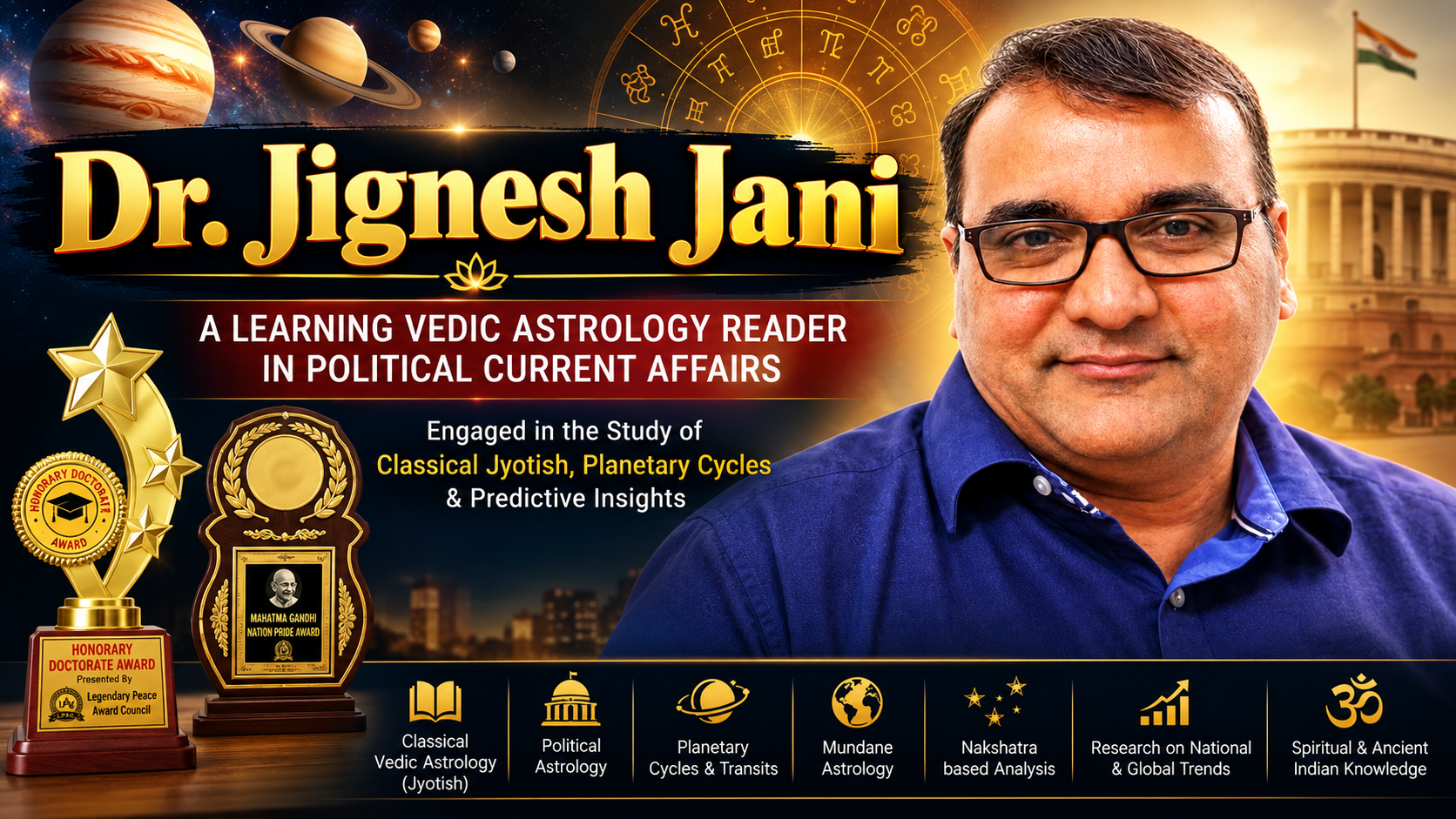
Ahmedabad | July 10, 2026: Vedic astrology researcher Jignesh Jani has presented his symbolic interpretation of current global geopolitical trends through the principles of traditional Jyotish. According to Jani, planetary movements have long been studied in Vedic astrology as symbolic representations of broader collective cycles. He emphasized that these interpretations should not be regarded as scientifically established predictions but rather as philosophical perspectives that encourage reflection on international developments.
Jani explained that many Vedic astrologers currently interpret the Mars–Rahu conjunction, traditionally known as Angarak Yoga, as symbolizing heightened strategic activity, decisive leadership, and periods of increased geopolitical attention. Likewise, the Saturn–Neptune alignment is viewed by many practitioners as representing institutional transformation, evolving global alliances, ideological change, and long-term restructuring within international systems.
At the same time, Jani highlighted Jupiter’s traditional role as a symbol of wisdom, justice, ethics, education, and diplomacy. He noted that many astrologers believe Jupiter encourages dialogue, restraint, balanced leadership, and peaceful negotiations during periods of uncertainty, offering a symbolic reminder of the importance of cooperation in addressing global challenges.
While discussing these traditional interpretations, Jani stressed that geopolitical developments are shaped by a wide range of real-world factors, including diplomacy, economic policies, technological advancement, security considerations, international law, and the decisions of governments and global institutions. Astrology, he said, should complement thoughtful discussion rather than replace evidence-based analysis.
“Vedic astrology provides a symbolic framework for understanding collective cycles, but it does not determine future events,” Jani said. “The direction of the world depends on the wisdom of leaders, responsible policymaking, international cooperation, and the willingness of nations to resolve differences through peaceful dialogue.”
Jani encouraged readers to appreciate Vedic astrology as an important part of India’s cultural and intellectual heritage while maintaining a clear distinction between symbolic interpretations and factual geopolitical analysis. He concluded by expressing hope that diplomacy, mutual respect, ethical leadership, and constructive international engagement will continue to guide the global community toward lasting peace, stability, and sustainable development in the years ahead.